Wow, my last blog post was well over a year ago. As I mentioned I started my doctoral program and have little time for much extra-curricular activities. In the past year I have brewed less than I am used to, but I have been able to knock out a few beers. I won't do much of a recap here (I'll save that for a later post) but I have almost exclusively brewed sour or funky beers. I decided last winter to give up on trying to brew clean beers (at least any with any age on them) and so I have started to develop two house mixed-strains (brett, lacto and sac.). I have nailed down a solid Berliner procedure and have brewed several Berliner and Gose, again an update will come later.
For my Autumn Saison I decided to brew a pumpkin inspired beer. However, instead of a pumpkin spice slant, I went for other fall flavors of pumpkins, dark brown sugar, toasted pumpkin seeds and fresh sage. The squash/pumpkin and their seeds were from a local farm that we are a CSA member of (Suzies Farm). The sage was grown in my yard and I purchased dark brown Muscavado sugar. I cut up the squash, de-seeded, and roasted the squash with some brown sugar. I then toasted the seeds to a deep brown toast level (they had a nice toasty, nutty flavor). I threw the roasted squash and crushed toasted seeds into the mash. I added the muscavado sugar to the boil and threw in some Ultra hops at the start of the boil for the lone addition. At flame out I threw in about 12 fresh sage leaves. I chilled and then pitched my House Blend #1 (WLP 644 "Sacc Trois" and WLP 670 American Farmhouse) it was the second generation of this blend. The beer has a wonderful orange hue, a nice aroma of burnt sugar, molasses and sage. I'm looking forward to having this beer with Thanksgiving dinner. My next beer will be a Dark Winter Saison inspired by Lost Abbey's 10 Commandments and Mike Tonsmiere's annual dark saison beers.
Saturday, November 7, 2015
Tuesday, July 1, 2014
Sour Update
So I have dabbled in sour beer brewing for about 7 years. I
have never really made a consistent effort in the brewing of sour beers
(something I think is important to do if you want to be successful) but I have
brewed a batch or two a year. This includes Berliner Weisse, Gose, Flemish
Sours and American Wild/Sour Ales. I have had two batches that I had to drain
pour, and a couple that have been great and served to great acclaim. My first
attempt just took 5th place at the San Diego County Fair, it was a 7
year old Flemish Red. I had a dark Saison get infected with my “garage” brett
strain and so I decided to start adding the dregs of some of my favorite sour
beers including Russian River and early batches of the Bruery beers. This beer
came out wonderful after having to wait a year and a half for diacetyl to get
cleaned up by the brett. I served this beer on tap at the 2011 NHC Club Night
here in San Diego. It was a big hit and the keg kicked quickly. I also brewed
three Berliner Weisse and two Gose that came out very tart and refreshing. I aged
the Gose on Cranberries, which ended up being a great combination of flavors.
As I mentioned in my last post I have been reading American Sour Beers and have
been re-inspired to brew more sour beers and do it with greater purpose and
consistency to build my skills and knowledge in this arena of brewing.
In the past few years I have tried to brew a Flemish Sour
every two years and now I have three versions sitting in my garage. I sampled
them and gave them some quick descriptives and letter grade. I have the notes
below. I also tasted a few beers that I hadn’t touched in a year to see where
they were in their funkification. One is a White Labs Berliner Blend and theother was a Sour Mash Berliner. My previous Berliners were using Wyeast and US
05. The other two beers were a Squash Saison brewed around the same time as the
Dark Saison, which was also infected by my “garage” strain of Brett. I also
added several dregs of commercial sours to this beer. It is close to 5 years
old and the diacetyl hung on for dear life the past 4 years. The final beer was
a 100% Brett. Anomalus from Al B at East Coast Yeast. The yeast was old at the
time brewed it and although I built up a starter the beer never really came
together well, lots of vinyl phenols. I remained patient and let it sit with my
fingers crossed and an optimistic outlook.
Below is the breakdown of my short tasting notes and letter
grades assigned to each beer. I have also noted the current treatments and thoughts
about what I might do with each beer.
Flanders Batch #1 (brewed 2007). White Labs Flemish Sour Ale
Blend. B- This beer is sour, not acetic, relatively one dimensional and has a
significant amount of vinyl phenols. I am thinking of pitching some additional
brett and fresh wort to try and convert the phenols, but maybe just more age is
needed. A good beer to use in a blend in the future.
Flanders Batch #2 (brewed 2009). White Labs Flemish Sour Ale
Blend. B+ This beer is super sour, has a rich balsamic vinegar quality to it. I
think this would be a good acid beer to blend with a newer less acidic
batch.
Rosy Rosalare: Flemish Sour (Brewed 2011). WYeast Rosalare.
B+ This beer has a nice tart flavor, with good structure that gives the beer a
nice mouthfeel. It has some fruity esters that remind me of cherries. It does
have some slight vinyl phenols. This has some great promise and the esters
scream, add cherries. I added 2 pounds of the tartest sweet fresh cherries I
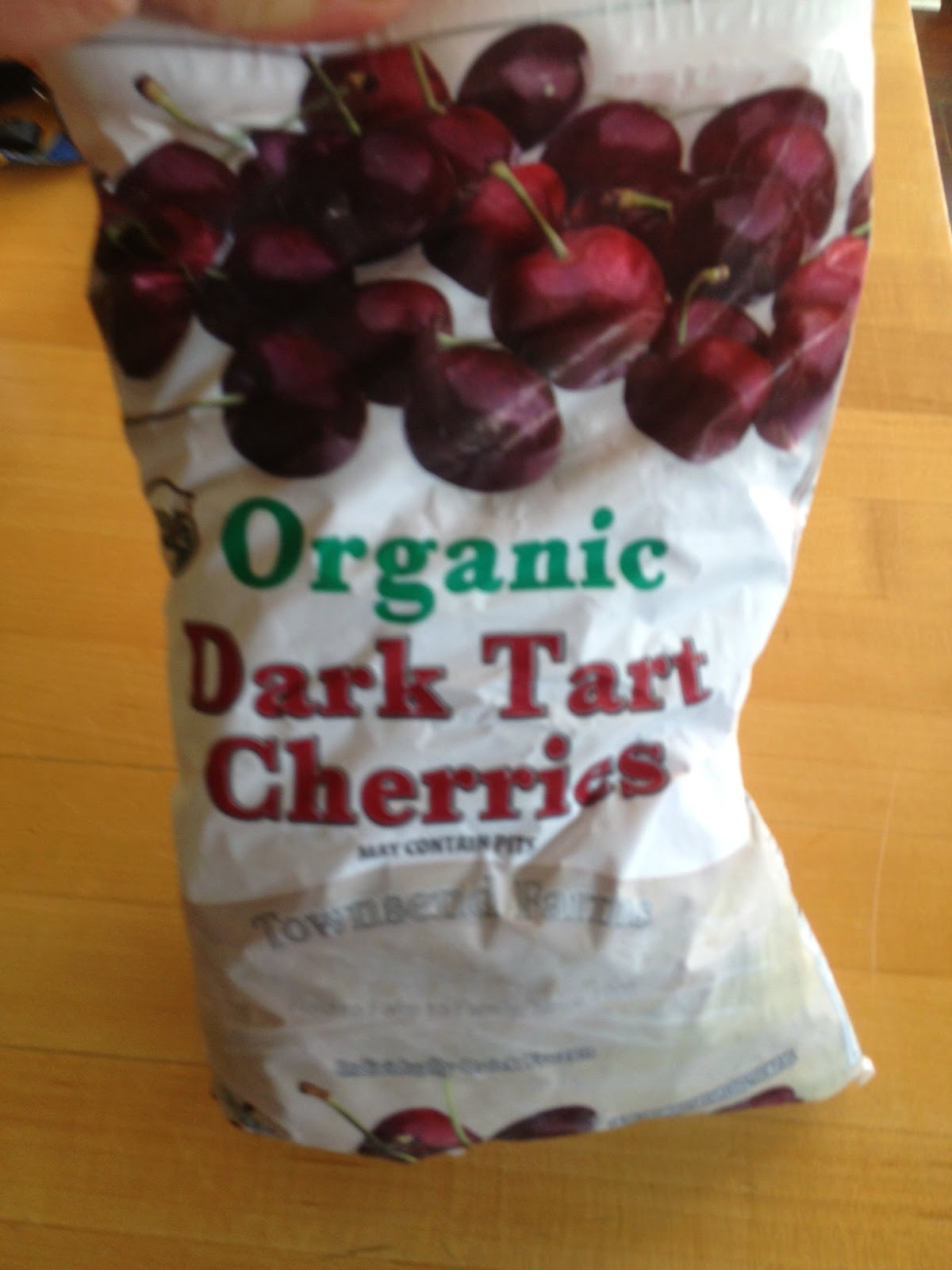
could get at the farmers market and then I added 3 pounds of frozen dark tart
cherries I purchased from Costco.
Lacto Berliner: (Brewed 2013) B+ Light Sourness, Plain
taste, very light body. Since this beer was so mellow I decided to add 2 pounds
of frozen peaches from last year. I have heard peach is the hardest of the
fruits to show through in a sour, so I figured that this would be a good base
beer to test out how peaches do in sour homebrews. There was some small visible
signs of refermentation after I added the peaches.
Sour Mash Berliner. (Brewed 2013) B-/B Funky, Sour, some
fruit, but also a substantial vomit-like aroma and flavor, although the vomit
is les sin the flavor than the aroma. I have heard about this with sour mashes
so even though I’m frustrated with it, I expected it. If you can get past the
vomit aspects, the fruitiness and sourness are really nice. I had 3 pounds of
blackberries I froze last summer that I added to the beer about two weeks ago. There
was visible signs of refermentation after I added the blackberries. The vomit-like
aroma has almost dissipated at this point.
Sour Squash Saison (Brewed 2008) A- Strong sour, funky,
golden color. Good body and structure. Slight/balanced acetic. Could be blended
or dry hopped with a fruity, tropical or citrusy hop with good results. Diacetyl
has almost completely faded, but I have a larger threshold than most.
100% Brett a. (Brewed 2013) A This one was a surprise. I
didn’t add any souring bugs, and it has been aging in a corny keg, but the beer
came out sour, fruity, funky and a dark golden color. I came across some really
great nectarines and so I figured what the heck, lets throw these in with this
beer and see where it goes. I thought I would have to dump this batch 6 months
ago, glad I didn’t. I added almost 8 pounds of extremely fresh and tasty
nectarines to a carboy and racked the beer on top. I may dry hop as well or age
on some wine soaked oak cubes.
Sunday, June 29, 2014
Massive Update
Well I have been super busy, and just a bit lazy about
updating the blog. I see that the last real update came in April. I have brewed
5 beers in that time. Four of those beers were served at various celebrations
(work party, weddings, and rehearsal dinners). Those 4 beers were all served
within a month of each other so I had to be on a tight schedule to make sure
that the beers I was providing for the events were ready to go on those special
days.
Those beers include the following beers, with quick
descriptions. If your interested in any details leave a comment and I will
expand:
Blonde: basic recipe, third batch, and it amazes me how
awesome this beer comes out, I think this will become my base pale sour beer.
HopBrosia IPA: A basic IPA with all the hops I had that
don’t have dank, pine and resin. I wanted a “fruit salad” flavor and aroma.
Hopped with Amarillo, Citra, Mosaic, El Dorado, Huell Melon and Galaxy. I also
used the Vermont Pale Ale yeasty from the Yeast Bay. The beer was young and it
was a bit muddled, but overall a nice drinking beer.
Wedding Day Pale Ale: Basic pale ale recipe of two row,
honey malt and victory. Hooped with a CTZ bittering charge, followed by
Chinook, Amarillo and a bit of Citra at flame out. Great base malt to balance
the nice piney, grapefruit, citrusy hops. Really happy with this one and I will
be making the malt profile my base pale ale recipe. I also added grapefruit
zest at flame out.
Cerveza de Jamica: This was for a rehearsal dinner that they
served Mexican food. I wanted to make a beer that was fun, refreshing and
went with the Mexican food theme. I modeled the beer after the traditional
Mexican aqua fresca Jamaica (hibiscus flower tea)The base beer was a wit
(although this could have been my basic wheat beer recipe) after fermentation
ended, I added 1 pound of dried Jamica flowers. The beer instantly turned a
bright pink, see the pictures below. I racked off the flowers after two days
and then added a hop sack with a whole hand of fresh ginger (sliced), three
cinnamon sticks, 5 cloves and 5 all spice rounds. The spices didn’t really
stick out to me even after two days in the keg. The beer was magenta in color,
tart, refreshing and a huge hit.
I got my results back from the NHC, and my Hoppy Wheat: Hot
Curl entered into American Wheat beer got great feedback from the judges, but
they said it was too hoppy for the style. It would have been marked down in the
IPA category for being cloudy. Not too surprised but I was glad to hear they
are expanding several of the BJCP categories. My cucumber saison did well, but
unfortunately it didn’t make it to the next round in the veg, beer category. I
probably need it too dry out a bit more for a saison.
I have been reading Mike Tonsmeire’s of the Mad Fermentationist Blog new book American Sour Beers: Innovative Techniquesfor Mixed Fermentations. Reading this book has re-inspired me for sour
funky brewing that I had stepped away from as of late. Mike’s book is awesome
and super helpful. I highly suggest it if you are brewing sours or are thinking
about it. It’s a great addition to Jeff Sparrows’ Wild Brews Because of finding my inspiration I have also been
messing with my sours that range in age from 5 years to 1+ years. I will post a
second update regarding my sours soon.
Looking forward to brewing lots of beer this summer. I start
my Doc program in the Fall, so I am not sure how much time I’ll have to brew in
the next three years.
Wednesday, April 2, 2014
Two Session Beers: Session Lager and Grodziskie/Grater
Monday I brewed a couple of low ABV session beers. They were two beers that
I had on my brewing agenda for some time, but due to brewing beers for a few
obligations I hadn’t had the chance to get around to them.
The first beer I brewed was an interesting experience based on a historic style. My best friend’s mom is Polish and since she was one of the first people to let me try craft beer, and she bought my friend his first homebrew kit (which was essentially ours) I wanted to make a beer in her honor. The beer is called Grodziskie ( and more commonly Gratzer in German), which is a 100% oak smoked wheat beer. After reading about this beer online, in Radical Brewing, and Brewing with Wheat what I gather is that the beer is low in ABV, approximately 3-3.5%, highly hopped (for a historic Continental beer) and is made with 100% oak smoked wheat. I have wanted to brew this beer for a while, but considering that smoking my own wheat malt was not something I wanted to do, I thought I would be out of luck. When I was The Homebrewer, my local homebrew shop the other day I saw that they had oak smoked wheat malt, so I knew it was time to make this beer. I am excited about the oak smoked wheat beer being available, it has a lighter smoke profile than either Rauch malt, or cherry wood smoked malt. My only worry is that since it has a very light smoke profile, the smoke may not stand out enough. I went with one hop addition of northern brewer to get some bitterness, but no flavor or aroma, I want the smoke to stand out in the flavor and aroma. I opted for a Kolsh yeast since it is probably most historically accurate. The beer should be light, refreshing and slightly smoky. Perfect for bbq weather.
Recipe: Weyermann Oak Smoked Wheat, Rice Hulls. German Northern Brewer @ 60. Wyeast 2565 Kolsh Ale Yeast.
The second beer I brewed was a Lil’ Lager. Essentially it is
an American Session Lager about 3% ABV and hopped with Nelson and Mosaic. I
wanted to build up a healthy amount of lager yeast and I decided what better
way to do this than to make a small lager and then re-pitch the yeast into a
higher ABV beer at a later date. I pitched 3 packages of dry lager yeast. I
kept the malt bill simple and used some non-traditional hops. This will give me
a chance to see how these two hops work together.
Recipe: US 2 Row, Flaked Rice, and a dash of Rye and Honey
Malt. Nelson @60, Mosaic @ 30, and Mosaic/Nelson at Flameout. Safe Lager 23.
Friday, March 14, 2014
Monday, February 17, 2014
2014 NHC Entries: Hot Curl and Cucumber Saison
I was able to get two spots for this years National
Homebrewers Competition. The past two years I have not entered, so I am really
excited to be able to get some feedback and hopefully make it out of round 1 again.
When I was thinking which beers I wanted to enter I decided I wanted to enter a
few beers that I have brewed in the past. The first was my cucumber saison, a
really refreshing and drinkable beer that was a huge hit with my friends. The
other was my hot curl, hoppy wheat beer. However, for this version I wanted to
employ some new hops and make my second attempt at a hop burst hop
schedule. Below are further thoughts on
each beer, modifications from the original recipes and the recipes.
Hot Curl Batch 2: Hop Burst Mosaic, Amarillo, Citra version
My Hot Curl recipe was my take on a relatively new style the
White IPA or a Hoppy Wheat beer. I have been drinking a ton of Modern Times
Fortunate Island and the other day I had Karl Strauss’ Mosaic Wheat. I often
add a bit of wheat malt to my beers as I just feel it gives a well rounded
flavor and mouthfeel. Since I enjoy Fortunate Islands so much and my first take
on Hot Curl was good, but a little one dimesnsional I decided that I would mix
up the hops a bit and use the hop bursting technique I used on my last hoppy
wheat. I have a pretty good selection of hops right now (Niko brewing has had
some great sales). Fortunate Island uses Amarillo and Citra, so I knew I wanted
to start there and I also added mosaic since it is supposed to have some
awesome fruity properties. I went with an ounce of each at 15, and 2 ounces of
Mosaic and Amarillo and 1 ounce of Citra and flameout. I am really hoping that
this beer comes out with a huge fruity hop profile. It should be great fresh
and it is a pretty easy beer to re-tweak if needed. I thought about suing some
Nelson as well, but decided against it since Nelson is so unique.
Recipe: US 2 Row, White Wheat, Honey Malt. Mosaic, Amarillo
and Citra @ 15 and Flameout. US-05.
Cucumber Saison Batch 2
Last time I made this beer I made a 10 gallon batch and
split it into two 5 gallon batches. One got cucumber and the other jasmine
green tea. They were both awesome, but I felt the Jasmine version became too
sweet over time. The cucumber version was great fresh and with a bit of age. I
may have a hard time finding local organic cucumbers this time of year (last
time I used cucs from our Suzie’s Farm CSA). I also decided last time that I
will de-seed the cucumbers since I think they gave the beer an weird bitter
quality. I may also dry hop the beer with a bit of Sorachi Ace hops. The base
beer is a simple light saison. It should be a great beer to transition into
spring/warmer weather beers.
Recipe: US 2 Row, White Wheat, Turbinado Sugar, Northern
Brewer hops @60, Horizon @ 20 and 0. WYeast French Saison
Friday, February 7, 2014
AD Man Tribute Ales
Dad and Mom
I congratulate my dad and wish him a wonderful retirement from Advertising and wish him luck in what ever he does next (he says he wants to teach geography at a community college).
Tuesday, January 21, 2014
Old Oak (A Samael Clone)
Recipe: US-2 Row, Golden Promise, Crystal 120 and brown sugar. Fuggles @60 and @20, White labs British Ale Yeast.
Saison Rustique
I wanted to include multiple grains, but not make a hot mess of a beer. I started with 2 row, honey malt and then start adding the "other grains". I then added red wheat, rye malt, flaked rye, Simpsons golden naked oats, flake corn, and brown sugar. I thought about adding some flaked rice, but decided against it based on the flavor of the other grains and how they would probably overshadow the rice. This was also the first beer I have ever used rice hulls on, Because I had so many flaked grains, I wanted to ensure a stuck- less mash. I did not go very hop forward in this beer which is not my usual approach to saisons, a beer I think really go well with big late American hop additions. I used a more traditional hop, but it will still have a hop presence. I also wanted to use a fun, wild, rustic yeast that had some funk as well as traditional saison flavor profile. I had good luck last year with my Spring Saison and with my Citrus Saison so I decided to use the American Farmhouse Strain again.
The beer came out much darker than Beer Alchemy and I expected. I am not sure why it came out so much darker that expected. Maybe the rye malt gave it some extra color??
Recipe: US-2 Row, Honey malt, Rye malt, Falked Rye, Red Wheat, Flaked Corn, Simpsons Golden Naked Oats, Brown Sugar, Fuggle Hops @60, @20 and @ flameout and WLP American Farmhouse Ale Yeast.
Monday, January 20, 2014
Milk Chocolate Orange Stout
The beer was a hit and I felt I got pretty close to nailing the chocolate orange. However, next time I will bump up the chocolate malts to have the base beer really create the chocolate flavor, so I don't create a muddy mess.
Recipe: US-2 Row, White Wheat, Pale Chocolate Malt, Crystal 120, Roasted Barley, and lactose sugar. Oranges, orange zest, cocoa powder, Gran Marnier oak cubes, Amarillo at 60min, 20 min and Saf Ale US05.
Monday, November 11, 2013
A Charlie's Brown: Thanksgiving Beer
Today I brewed up a batch of a brown ale. I wanted a malt forward beer with enough hop bitterness to balance it out. It is kind of a cross between a Southern Brown Ale (malty, sweet, fruity) and an American Brown (roasty, hoppy, dry). The malt bill is more Southern, but I used a substantial dose of Sterling hops in the boil. My local homebrew store, The Homebrewer has an amazing variety of grain. I built my recipe using Beer Alchemy, but upon getting to the store I realized the store had some better options for my beer, so I called an audible on the malt bill. I built the base on a 50/50 blend of Golden Promise and Ashburne Mild. I then picked out two crystal malts to add some sweetness and added dark fruit, burnt sugar and toffee flavors. I then finished off the bill with pale chocolate malt to get chocolate flavors and color, and some coffee kiln malt to add some roasty, coffee-like flavors. I also used a American Style yeast to keep the beer dry and allowing the fruit component to come mainly from the malt bill and not the yeast.
This beer will a great beer to pair with Thanksgiving dinner.
Recipe: Golden Promise, Ashburne Mild Malt, Dark Crystal (~80L), Extra Dark Crystal (~130L), Pale Chocolate Malt, Coffee Kiln Malt. Sterling Hops @60, and US-05.
Thursday, September 19, 2013
Friday, June 21, 2013
Hot Curl
I was reading an article a few months ago about the history
of San Diego (a subject that I geek out on). While reading about San Diego’s
surf history I stumbled upon an article about a surfer-made statue that
represented as the artist put it a “crummy surfer”, loosely model after
himself. The statue was known as Hot Curl was first erected in 1963 by artist
and self-described “crummy surfer” Mike
Domer (now 77) and his buddy Lee Teacher. The two built the 6’4” cement, scrap
iron, and chicken wire statue and placed it next to the surf shack at Windansea
beach in La Jolla. The statue was subject to love and hate and was taken down
by City crews, only to be built again after passing city permit tests. Finally,
a disgruntled surfer bludgeoned it to pieces late one night. Although the
statute didn’t last long in its original location, a replica now sits in the
Surf Museum. In addition to the current replica, Hot Curl became an icon of the
surf movement in the 60s and continues to represent that early age of surfing
culture today. Hot Curl has also been a comic for a number of years.
I love these old nostalgic stories of San Diegans in the
“old days” doing crazy, weird and awesome things. The city was so much smaller
then and was much more laid back. I figured I would honor the surf culture of
San Diego through a beer. Karl Strauss makes a traditional hefewiezen called
Windansea Wheat. I wanted to build off their model and create a beer that is
just a little more San Diegan than a German Hefe. So I built a recipe for a
Hoppy Wheat Beer (an IPW if you will). It is pretty standard wheat malt bill
with an American Wheat yeast and American Hops. This beer should be a great
porch sipper or a clandestine beach brew. Either way it should make a great
summer beer. I hadn’t brewed a hoppy
beer in a while and when I opened my bag of Amarillo hops I was inundated by the
amazing aroma of this hop, which continues to be my favorite hop. Here’s to Hot
Curl!
Subscribe to:
Posts (Atom)


.jpg)